236 王之渙 登鸛雀樓 translation: Climbing White Stork Tower, by Wang Zhihuan
白日依山盡 (Bái Rì Yī Shān Jǐn)
This is a translation and annotation of the poem 登鸛雀樓 (Dēng Guànquè Lóu), by the Tang dynasty poet 王之渙 (Wang Zhihuan). The poem is #236 in the collection [300 Tang Poems](/china/classical/300-tang-poems/” rel="contents “唐詩三百首”), and is also known by its first line: 白日依山盡 (Bái Rì Yī Shān Jǐn).
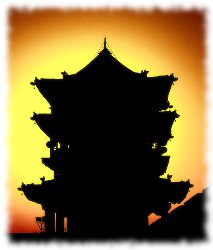
登鸛雀樓 Dēng Guànquè Lóu [ascend] [stork] [sparrow] [tower] Climbing White Stork Tower
白日依山盡, Bái rì yī shān jìn, [white] [sun] [on] [mountain] [finish] The white sun sets behind the mountains,
黃河入海流; Huánghé rù hǎiliú; [Yellow] [River] [enter] [sea] [flow] and the Yellow River flows into the sea.
欲窮千里目, yù qióng qiānlǐ mù, [want] [furthest] [thousand] [mile] [eye] To see a thousand mile view,
更上一層樓。 gèng shàng yì céng lóu. [more] [ascend] [one] [floor] [tower] go up another floor.
If you notice a mistake or disagree with the translation, please comment below to improve this resource. You might want to have a read of this, as well.
Notes
鸛雀樓 is a tower in Shanxi province, with three floors, situated between mountains and the Yellow River.
窮 in the third line is like 盡 here, meaning “furthest”. 里 has been translated as ‘mile’ above, although more accurately one 里 is a third of a mile.
The last line, 更上一層樓, is now a general idiom for taking things up a level, a bit like the colloquial 加油.
Source: 登鹳雀楼 - 百度百科
Links:
- [300 Tang Poems (Waters, Farman, Lunde)](http://www.amazon.com/exec/obidos/ASIN/1935210262/easasistu-20" rel="external nofollow “300 Tang Poems [Paperback]")
- [Fifty Five T’ang Poems (Hugh M. Stimson)](http://www.amazon.com/exec/obidos/ASIN/0887100260/easasistu-20" rel="external nofollow “Fifty Five T’ang Poems (paperback on Amazon UK)")
- [Poems of the Late T’ang (A. C. Graham)](http://www.amazon.com/exec/obidos/ASIN/1590172574/easasistu-20" rel="external nofollow “Poems of the Late T’ang (New York Review Books Classics)")
- Translation of 登鸛雀樓 into English by 曾培慈
- Translation of 登鸛雀樓 into English by Ying Sun
